


INTRODUCTION
It is undeniable that the ‘creator economy’ is having its moment in the sun. More people are searching & talking about it than ever before. Some creators now command audience sizes greater than TV shows. And huge amounts of money is swirling around the space. In 2022 the creator economy was valued at a whopping $104.2BN [1] and it has grown by over 165M people in the last two years alone [2]. Becoming a ‘YouTuber’ is also now the job that Gen Z aspire to more than any other[3]. Whether you are a fan or not its also hard to ignore the billion-dollar empire Mr Beast has built spanning media, burgers and chocolate [4]. Closer-to-home community building seems to have even penetrated traditional marketing with the likes of Mark Ritson & Mark Pollard building large communities and turning them into successful businesses. Heck, even Les Binet has a YouTube channel now (it’s really good, go check it out).
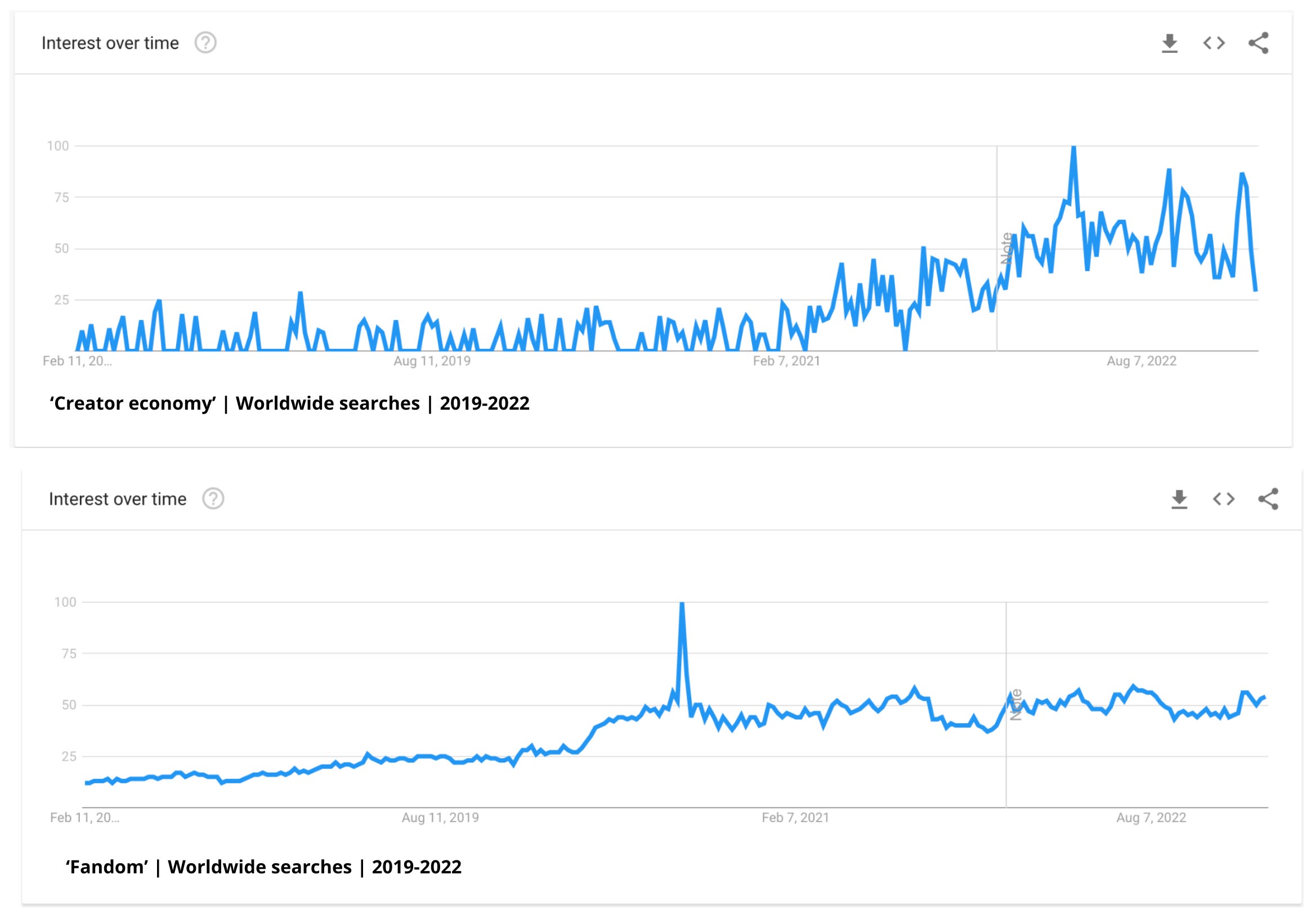
Ref #1: Search volume related to the creator economy has never been higher (source: Google trends)
Yet despite all of the above many marketers aren’t convinced. When ‘communities’ or ‘fandoms’ are mentioned many simply dismiss the idea outright. Community building they argue goes against important marketing science established by the likes of Byron Sharp, Les Binet & Peter Field.
In response to that I have set myself a (probably impossible) challenge. I am going to try and reconcile community building with marketing science. To achieve this I will break this essay down into three parts. First, I will attempt to reconcile some of the main criticisms against community building. Second, I will show how community building actually complements marketing science. And finally, I will offer a suggestion as to how community building might be implemented into the marketing mix.
